
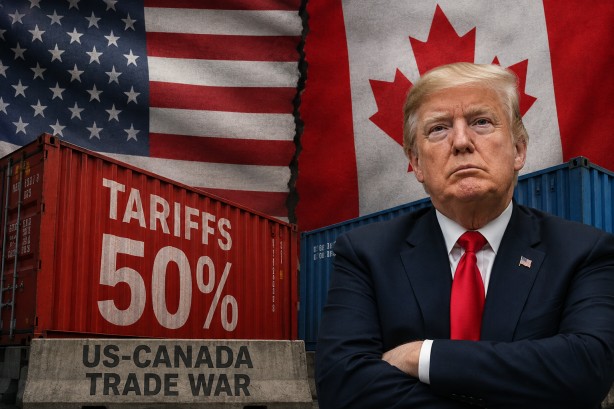
Escalating tensions in the ongoing trade dispute between the United States and Canada, President Donald Trump has imposed a steep 50% tariff on approximately $20 billion worth of Canadian exports. This decision comes after recent negotiations in Washington failed to reach a resolution. Key Canadian goods, including hockey sticks and medical supplies, are among those affected by the new tariffs.
In response, Canadian Prime Minister Mark Carney has pledged to retaliate with equivalent measures, announcing that Canada will impose matching tariffs on American goods starting September 8. Carney criticized the U.S. action as a direct attack on Canada and emphasized that his government would not acquiesce to the demands presented during the discussions.
U.S. Trade Representative Jamieson Greer defended the tariffs, arguing that they are essential for safeguarding American workers and securing supply chains. This latest development has cast uncertainty over the future of the United States-Mexico-Canada Agreement (USMCA), a pivotal trade deal that facilitates roughly $2 trillion in annual trade among the three countries.
The intensifying trade conflict raises concerns about potential increased costs for businesses and consumers, alongside the possibility of further straining the economic relationship between the U.S. and Canada. As both nations prepare to implement their respective tariffs, the economic ramifications of this dispute are likely to become more pronounced.