
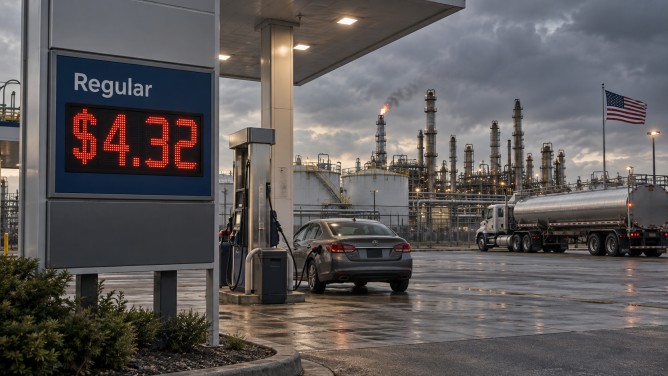
As gasoline prices climb to an average of $4.32 per gallon across the United States, consumers are feeling the pinch at the pump, impacting household budgets and transportation costs. This increase, fueled by global oil supply uncertainties and geopolitical tensions, marks a significant rise of nearly 25 cents in just two weeks, according to the US Energy Information Administration (EIA).
The surge in gasoline prices is largely driven by disruptions in the global crude oil market. Ongoing conflicts and tensions, particularly involving the Middle East, Iran, and the Russia-Ukraine conflict, have raised alarms about potential supply shortages, pushing energy prices higher. This situation poses a challenge for consumers and businesses alike as they navigate the increasing cost of fuel.
Additionally, diesel prices have reached record highs, further straining transportation and shipping sectors. Higher diesel costs translate into increased expenses for moving goods, which could ripple through the economy by elevating consumer prices on a broad scale. This development adds to the financial pressure many are already experiencing in various areas of daily life.
Typically, gasoline prices tend to decrease in the fall as US refineries transition to cheaper winter-grade fuel. However, analysts caution that this seasonal relief might be limited this year due to persistent geopolitical risks that continue to influence the energy markets. Without the usual price drop, consumers may not see the relief they have come to expect during this time of year.
Moreover, the US Strategic Petroleum Reserve is not as robust as in previous years, following significant withdrawals. This depletion might hinder the government’s ability to respond effectively to any new major supply disruptions, further complicating the situation for policymakers and consumers alike.
Looking ahead, energy analysts predict ongoing volatility in fuel prices. While any seasonal decline in gasoline prices could offer some respite, the persistent risks associated with global oil supply remain a significant factor that could keep prices elevated, affecting a broad spectrum of economic activities and everyday life.