
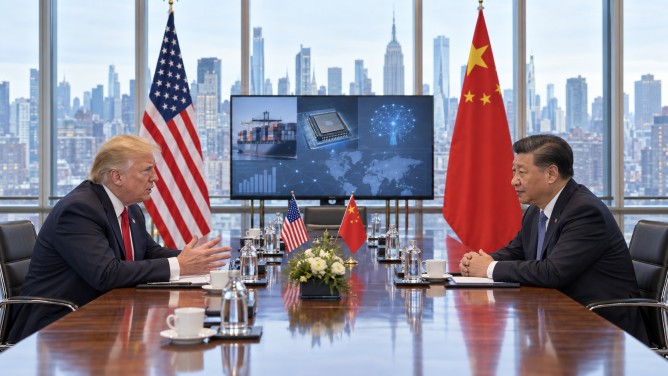
The ongoing dialogue between the United States and China aims to prevent an escalation in economic tensions that could disrupt global markets. As the deadline for the current trade truce approaches in November, maintaining open communication is critical to avoid the reintroduction of restrictive tariffs and export barriers, particularly affecting American energy and agricultural sectors.
In an effort to stabilize relations, US Treasury Secretary Scott Bessent and Chinese Vice Premier He Lifeng held talks in New York. These discussions are a prelude to a planned meeting between US President Donald Trump and Chinese President Xi Jinping, where trade and investment will be prominent topics. The meetings also look to address the competitive landscape of artificial intelligence (AI), a key area of contention.
Concerns have been raised by US officials and tech companies about the use of American-developed technology by Chinese firms to advance their AI capabilities. Such issues underscore the broader tech competition between the two nations, prompting both sides to explore frameworks to manage AI risks and prevent further division in their technology sectors.
The anticipated summit between Trump and Xi is expected to explore comprehensive strategies to enhance economic cooperation and address mutual concerns, including trade restrictions and technology competition. As these discussions unfold, observers hope for a resolution that will foster a more stable and collaborative economic relationship between the two largest economies in the world.