
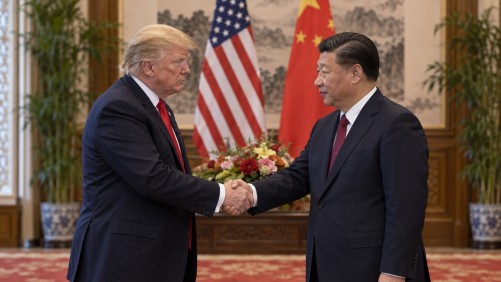
The upcoming meeting between U.S. President Donald Trump and Chinese President Xi Jinping could significantly impact global trade and technology relations, as the two leaders seek to navigate their countries’ strategic rivalry. The talks, set to occur in the United States, come amid ongoing disputes over trade agreements, artificial intelligence governance, and political tensions involving Taiwan.
Despite previous dialogue aimed at mending ties, major disagreements remain, particularly in the realm of technology. The United States has imposed restrictions on China’s access to advanced semiconductors crucial for artificial intelligence development, leading to accusations from Beijing that Washington is attempting to stifle its technological advancements. Both nations recognize the importance of AI, with U.S. officials proposing a communication mechanism to address AI safety and governance, though perspectives on risks and development sharply differ.
Trade continues to be a contentious issue, with a provisional U.S.-China trade agreement, involving tariff measures and Chinese rare-earth export restrictions, set to expire in November. While Beijing desires long-term trade stability, the U.S. views these restrictions as strategic leverage in negotiations. This meeting could influence the future direction of trade relations between the world’s two largest economies.
Another major topic likely to provoke discussion is Taiwan. The U.S. maintains strong defense ties with Taiwan, to which China, viewing the island as part of its territory, strongly objects. The potential for future U.S. arms sales to Taiwan remains a sensitive issue that could affect the diplomatic tone of the meeting.
Beyond bilateral disputes, Trump and Xi are expected to address broader international matters, such as conflicts involving Iran and Ukraine. China’s economic ties with Iran and its relationship with Russia present additional layers to these discussions. As both countries attempt to manage their rivalry while maintaining open channels for communication, the outcomes of this meeting may influence global trade, technology, and security landscapes.