
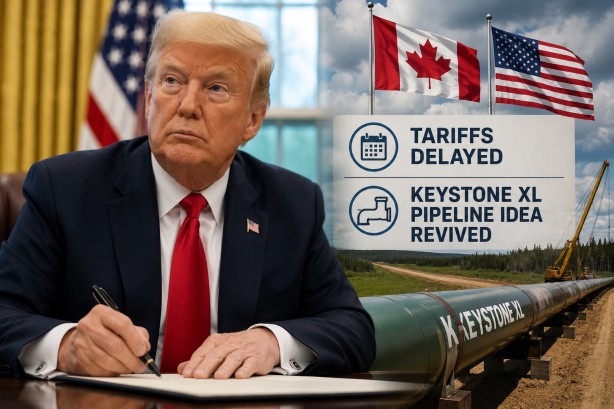
In a recent development, US President Donald Trump announced a three-day delay in the implementation of a proposed 50% tariff on Canadian goods. This postponement is attributed to progress in trade negotiations between the United States and Canada. Trump expressed optimism about the near completion of a trade deal, a sentiment echoed by Canadian Prime Minister Mark Carney, who acknowledged “substantial progress” while noting that additional work was necessary to finalize the agreement.
The tariffs, if enacted, could impact billions of dollars worth of Canadian exports, targeting products such as wine and hockey equipment. With the delay, both countries have been granted more time to iron out the details of the agreement. This move is seen as a potential easing of the tensions that have characterized US-Canada relations in recent months, which have been fraught with threats of tariffs and retaliatory trade measures.
In a related statement, President Trump hinted at the possibility of reviving the Keystone XL oil pipeline project, describing it as a venture that “may be awoken from the grave.” Although he did not elaborate on how this controversial project might tie into the trade discussions, the revival of Keystone XL could have significant implications. The pipeline was initially designed to transport oil from Canada’s western regions to US refineries but was halted in 2021 after a critical US permit was rescinded following considerable opposition from environmental groups, landowners, and Indigenous communities.
The trade negotiations and potential tariff impositions are particularly significant given the extensive economic ties between the two nations. The United States and Canada are major trading partners, with hundreds of billions of dollars in goods and services exchanged annually. Canadian businesses have voiced concerns over the potential tariffs, fearing increased costs and diminished access to the US market.
As both countries work towards resolving their trade differences, the delay in the tariff implementation offers a temporary respite. The outcome of these negotiations will be closely watched, as they hold considerable consequences for the economic relationship between the United States and Canada, impacting a wide array of industries and stakeholders on both sides of the border.