
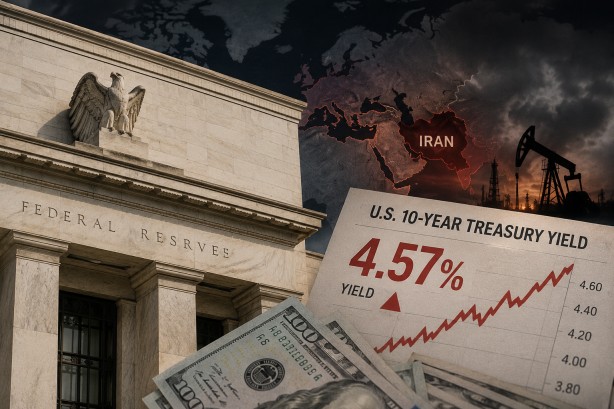
The cost of borrowing for the US government has reached its highest point since 2007, following the Federal Reserve’s decision to maintain its key interest rate, citing ongoing concerns about inflation. This decision has caused unease among investors, resulting in significant drops in major US stock indexes.
Adding to market instability, the US recently conducted new military strikes on Iranian targets. These actions were in response to attacks on American forces in Jordan, intensifying the already volatile situation in the Middle East. As a result, Brent crude oil prices surged past $88 per barrel, fueling worries about rising energy costs and their potential to exacerbate global inflation pressures.
Analysts are noting that the combination of sustained high interest rates, geopolitical tensions, and increasing oil prices is exerting additional pressure on financial markets. This confluence of factors has amplified concerns regarding the global economic outlook, with investors closely monitoring developments in these areas.
The escalating events in the Middle East, coupled with economic policy decisions in the US, are contributing to a complex and challenging environment for markets worldwide. As these dynamics unfold, stakeholders are grappling with the implications for both short-term market performance and long-term economic stability.
Overall, the current landscape presents a multifaceted challenge for policymakers and investors alike, as they navigate the intertwined effects of fiscal policy, geopolitical developments, and energy market fluctuations.