
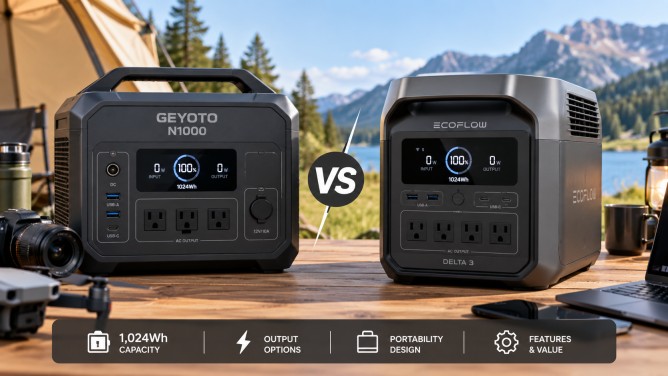
The GEYOTO N1000 and EcoFlow DELTA 3 Classic are two innovative portable power stations offering a battery capacity of 1,024Wh and a rated AC output of 1,800W, catering to home backup, outdoor activities, and emergency power needs. Both models use LiFePO4 batteries, ensuring reliability and longevity. While they share several core features, their main distinctions lie in connectivity options, solar charging capacity, surge capability, and portability. The GEYOTO N1000 is designed with an emphasis on flexible connectivity, wireless charging, vehicle applications, and a higher solar input capacity. In contrast, the EcoFlow DELTA 3 Classic prioritizes surge performance, portability, and smart backup features.
The GEYOTO N1000 boasts a diverse range of connection options, including four USB-C ports capable of delivering up to 140W, in addition to four AC outlets, two USB-A ports, and a 25W wireless charging surface. This makes it highly suitable for powering laptops, phones, cameras, and other portable electronics. Meanwhile, the DELTA 3 Classic offers a simpler setup with six AC outlets and fewer USB connections, tailored for users with basic device charging and AC power requirements. Notably, the N1000 also incorporates vehicle support, with 12V DC output and an XT60 jump-start output, a feature absent in the DELTA 3 Classic.
When it comes to charging capabilities, both units support fast AC charging, with the N1000 reaching 80% charge in approximately 43 minutes and the DELTA 3 Classic in about 45 minutes. However, the N1000 has a significant edge in solar charging, supporting up to 800W of input compared to the DELTA 3 Classic’s 500W. This capability can be particularly advantageous for extended outages and off-grid applications. In terms of high-draw appliances, while both models offer 1,800W of continuous AC output, the DELTA 3 Classic’s higher surge specification of 3,600W and X-Boost function provide a distinct advantage for powering equipment with temporary higher power requirements.
Portability also differentiates the two models, with the DELTA 3 Classic being lighter at approximately 12.1kg, making it easier to carry for those prioritizing weight. The N1000, weighing about 13.6kg, is equipped with protective features for outdoor use and includes emergency lighting and SOS functionality. Both power stations act as backup power systems with similar UPS transfer times, though the DELTA 3 Classic includes EcoFlow’s Storm Guard for automatic charging during severe-weather alerts, enhancing its utility in weather-related emergencies.
Ultimately, choosing between these power stations depends on individual needs. The GEYOTO N1000 excels in broader connectivity, wireless charging, vehicle applications, and higher solar input, making it ideal for users seeking a versatile power solution. Conversely, the EcoFlow DELTA 3 Classic’s lighter design, higher surge capability, and weather-based backup features make it a strong contender for those who prioritize portability and smart functionality.
Legal Disclaimer: The information contained in this article has been provided by independent third-party contributors, clients, or content partners. We do not independently verify the accuracy, completeness, legality, ownership, licensing, or reliability of submitted content, including text, images, videos, trademarks, or other media materials. The submitting party is solely responsible for ensuring that all content, including images and media assets, complies with applicable copyright, trademark, licensing, and intellectual property laws. We disclaim liability for any unauthorized use of copyrighted or proprietary materials by third parties. If you believe that any content published on this platform infringes your intellectual property rights, kindly contact the author above for prompt review and resolution.