
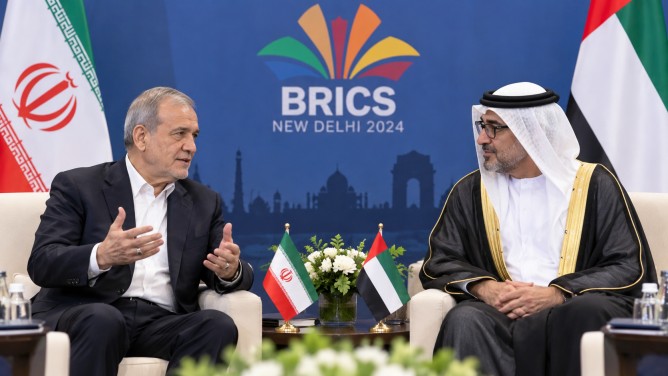
In a recent diplomatic move, Iranian President Masoud Pezeshkian expressed optimism about mending ties with the United Arab Emirates (UAE) following discussions with Abu Dhabi Crown Prince Khaled bin Mohamed. These talks, held during the BRICS Summit in New Delhi, aimed to overcome historical tensions and foster a forward-looking relationship between the two nations. Pezeshkian characterized the dialogue as constructive, with both parties agreeing to focus on future cooperation, particularly in light of ongoing regional challenges, including security and shipping concerns.
In an effort to bolster regional security, Iranian representatives are scheduled to meet with officials from Gulf countries and Iraq in Oman on September 14. The discussions will center on enhancing mutual understanding and strengthening collective security, especially concerning the strategic Strait of Hormuz. Notably, Bahrain has opted out of this meeting, marking its absence from these talks aimed at fostering regional stability.
President Pezeshkian also addressed the broader BRICS community, advocating for stronger economic cooperation and resilience among member countries. He emphasized the importance of increasing the use of national currencies in trade and developing improved financial mechanisms to reduce dependence on existing global systems. According to Pezeshkian, such dependence leaves emerging economies susceptible to external political and economic pressures.
Highlighting Iran’s advantageous geographical position, its energy resources, and extensive transit networks, Pezeshkian articulated Iran’s potential role in enhancing trade and energy corridors that connect BRICS economies. He urged member nations to unify against unilateral sanctions and attacks on civilian infrastructure, underscoring the need for a coordinated approach to economic resilience and cooperation.
These diplomatic initiatives emerge amid rising tensions in the Strait of Hormuz, underscoring the pressing need for regional dialogue and collaboration. The strategic importance of this waterway for global energy supplies makes such engagements crucial for maintaining security and fostering economic stability across the region.