
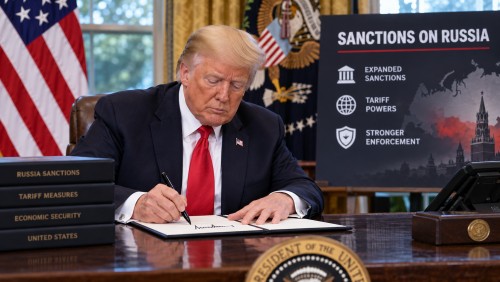
Countries heavily reliant on Russian energy imports, such as India and China, may soon face significant economic challenges as new U.S. legislation empowers President Donald Trump to impose substantial tariffs on nations that continue these purchases. With tariffs potentially reaching 100%, the law aims to dissuade countries from engaging with Russia’s lucrative energy sector, potentially reshaping global energy alliances and markets.
On September 18, President Trump signed into law a bill that not only expands sanctions against Russia but also extends existing sanctions on Iran. The legislation targets Russian officials, financial networks, and other entities linked to Russia’s war efforts, while also seeking to curb Russia’s ability to profit from its oil and gas exports. This move is part of a broader strategy to exert economic pressure on Moscow amid ongoing geopolitical tensions.
The new law, which passed the House of Representatives with bipartisan support, grants the president sweeping authority over the implementation of these tariffs. This includes the discretion to decide which countries to target and the flexibility to waive certain sanctions if deemed necessary. The administration’s decisions will be crucial in determining the law’s impact on international relations and trade dynamics.
According to the White House, the legislation is designed to strengthen existing sanctions and tariff authorities against Russia while maintaining pressure on Iran. This underscores the U.S. government’s commitment to countering perceived threats from both nations by leveraging economic measures.
The potential imposition of steep tariffs could have far-reaching implications for global energy trade, especially for countries that maintain robust energy ties with Russia. As the administration moves to implement these powers, the international community will be closely watching for decisions that could reshape energy dependencies and diplomatic relations on a global scale.