
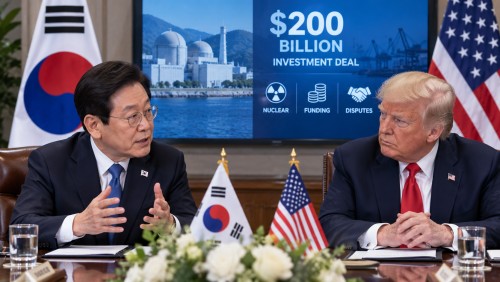
The ongoing negotiations between South Korea and the United States over a substantial $200 billion investment package could have significant implications for both countries’ energy sectors and economic ties. The resolution of differences related to nuclear projects, funding schedules, and investment risks will determine the future scope and scale of South Korea’s investment in the U.S.
Central to the disagreement is the selection of nuclear reactor designs, with the U.S. favoring Westinghouse’s AP1000 technology, while South Korea seeks to include its APR1400 design. This nuclear power contention could impact Seoul’s potential $120 billion allocation towards nuclear-related projects. The U.S. side, including Westinghouse, has reportedly resisted incorporating the Korean-designed reactors, complicating discussions.
Besides the choice of reactor designs, another sticking point is South Korea’s desire for a 15% to 20% ownership stake in Westinghouse, accompanied by voting rights and a board seat. Westinghouse, however, appears inclined to limit South Korea’s stake to less than 10%. These ownership terms could influence the degree of South Korean involvement in U.S. nuclear ventures.
The timing and amount of South Korea’s financial contributions also remain contentious. The U.S. has requested over $9 billion by the end of the year, which clashes with South Korea’s initial plan to begin with a smaller contribution in 2026, followed by increased annual investments starting in 2027. This divergence in funding schedules adds further uncertainty to the investment framework.
Disagreements extend to how investment returns and losses should be calculated. South Korea prefers a model where profits from successful projects offset losses from unsuccessful ones, whereas the U.S. advocates for separate accounting per project. Under the proposed framework, 90% of net profits after principal recovery would go to the U.S., prompting concerns from Seoul about the potential financial impact.
Despite these hurdles, both nations continue to negotiate, with South Korea’s Industry Ministry confirming that final decisions on projects, funding structures, and investment agreements are still pending. The outcome of these discussions will likely shape the strategic and economic landscape for both South Korea and the United States.