
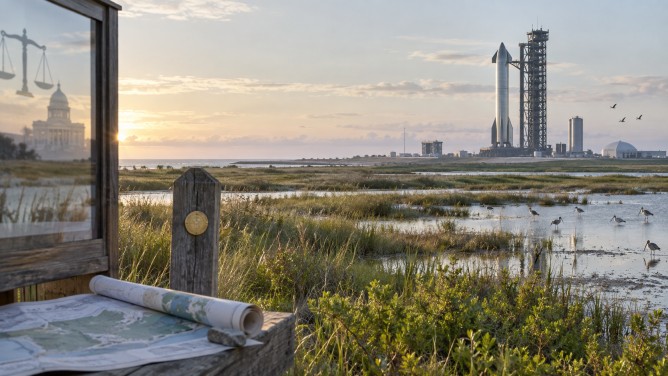
The potential expansion of SpaceX’s rocket launch facility near the US-Mexico border remains on track after a federal judge ruled against halting a land exchange deal with the Trump administration. This decision affects over 700 acres of federal wildlife refuge land in Texas, raising concerns about environmental and cultural impacts.
US District Judge Fernando Rodriguez Jr. denied a request from environmental and tribal groups to temporarily block the transfer of land within the Lower Rio Grande Valley National Wildlife Refuge. These groups worry that the transaction could pose significant ecological risks to the area, which is home to diverse wildlife and historical sites. Despite the setback, they plan to continue their legal battle against the deal.
The contested land exchange involves SpaceX trading 683 acres of its own property for federal land within the 103,000-acre refuge. The acquired land would be closer to SpaceX’s launch operations, potentially facilitating its expansion plans. While the US Fish and Wildlife Service has assessed that the swap would not result in significant environmental harm, it suggests potential benefits, such as enhanced conservation and improved habitat connectivity in South Texas.
In his ruling, Judge Rodriguez highlighted the plaintiffs’ failure to present enough evidence of immediate environmental, cultural, or historical damage that would justify halting the transaction. He also noted that preventing the exchange could disrupt SpaceX’s development objectives and affect its contractual agreements.
As the legal proceedings continue, the future of the wildlife refuge and SpaceX’s expansion in the region remains uncertain. The court’s decision underscores the ongoing tension between industrial development and environmental preservation, a debate that resonates beyond the borders of Texas.