
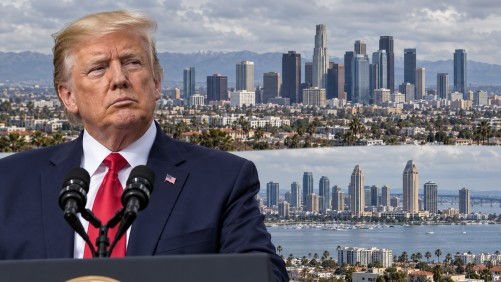
At a rally in Nebraska, President Donald Trump mentioned the potential destruction of Los Angeles and San Diego amid the ongoing U.S. conflict with Iran, though he did not provide further explanation for this statement. His comments came as he discussed the need for a decisive victory in the war, suggesting that the potential damage to major American cities would be a minor cost for achieving national and global security.
Trump expressed optimism about the war’s conclusion, stating his expectation for it to end soon, yet he also acknowledged the possibility of a prolonged conflict. The United States, in conjunction with Israel, initiated military operations against Iran on February 28. This conflict has heightened concerns about the security of the Strait of Hormuz, a critical global energy passage through which a significant amount of the world’s oil and liquefied natural gas is transported.
The President’s remarks have sparked discussions about the implications of the ongoing military actions and their potential impact on American cities. The mention of Los Angeles and San Diego has particularly raised questions, given the lack of specifics provided by Trump during his speech.
As the situation develops, the focus remains on the strategic importance of the Strait of Hormuz and the broader geopolitical tensions accompanying the U.S.-Iran conflict. The outcome of these military operations and their effects on both domestic and international fronts continue to be closely monitored.