
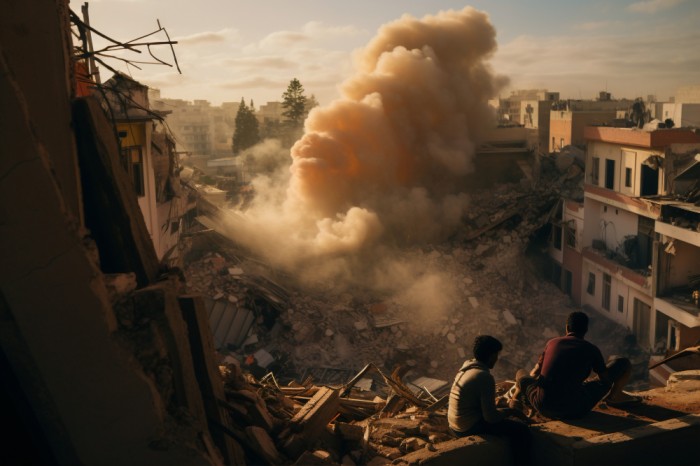
The escalating tension between the United States and Iran has reached a new peak, sparking fears of a broader conflict in the Gulf region. The United States military recently announced that it conducted a series of strikes targeting Iranian positions, which included air defense systems, drone facilities, and surveillance infrastructure. These actions were a response to an attack on a commercial vessel in the critical Strait of Hormuz. U.S. officials emphasized that the strikes were intended to neutralize Iranian threats in this vital maritime passage.
In retaliation, Iran’s Islamic Revolutionary Guard Corps declared that it launched missile and drone attacks against military facilities linked to the U.S. in Kuwait and Bahrain. Iran claimed success in hitting several targets, including a U.S. air base in Kuwait and a naval facility in Bahrain, although these claims have not been independently verified. Following these developments, both Kuwait and Bahrain reported heightened security alerts. Authorities in these countries activated defense systems and advised residents to seek safety, underscoring the growing concerns of a potential collapse of the already fragile ceasefire between Washington and Tehran.
The recent exchange of hostilities comes on the heels of previous U.S. military actions against Iranian sites, which were similarly linked to ongoing tensions in the Strait of Hormuz. This strategic waterway remains a focal point of conflict, as it is a crucial route for global energy supplies. The repeated confrontations over this area continue to highlight the fraught relations between the two nations.
U.S. President Donald Trump has accused Iran of breaching the ceasefire agreement, warning of the possibility of further military responses if the situation does not de-escalate. In contrast, Iran has pointed fingers at Washington, accusing the United States of heightening the situation and not honoring previous agreements. This diplomatic and military tit-for-tat underscores the precarious nature of peace in the region and the potential for further escalation.