
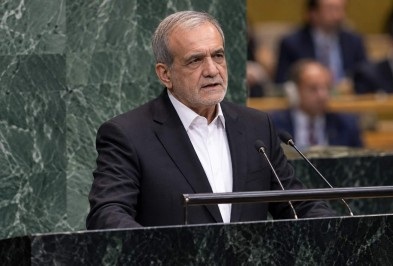
The strained relationship between the United States and Iran continues to impact global diplomatic and trade dynamics, with potential repercussions for international security and energy markets. Iranian President Masoud Pezeshkian, addressing the United Nations General Assembly, criticized U.S. President Donald Trump yet expressed a willingness to engage in dialogue, provided it occurs without threats or military pressure.
Pezeshkian’s comments underscore Iran’s openness to diplomacy even as tensions remain high, particularly concerning the strategic Strait of Hormuz. Disruptions in this vital waterway have affected international shipping and energy markets, highlighting the geopolitical stakes involved. Iran insists that reopening the strait hinges on lifting military pressure and economic restrictions, a demand that remains a sticking point in broader negotiations.
In a parallel diplomatic effort, Iranian Foreign Minister Abbas Araghchi met with U.S. special envoy Steve Witkoff. This meeting, facilitated by Qatari mediation, focused on negotiating terms to ease tensions and address Iran’s conditions for conflict resolution. Despite major disagreements, these talks suggest that a diplomatic solution remains within reach.
Pezeshkian reiterated Iran’s position that it seeks a peaceful nuclear program and does not aspire to develop nuclear weapons. He called for regional cooperation on security issues, urging neighboring countries to rely less on external powers. This stance reflects Iran’s ongoing efforts to assert its sovereignty and regional influence amid international pressures.
The Iranian president also accused the United States and Israel of aggressive actions, framing Tehran’s responses as self-defense. As economic sanctions continue to strain Iran’s economy and oil exports, the country emphasizes the need to resolve hostilities, lift naval blockades, and release Iranian assets as part of any negotiated settlement.
Despite these challenges, the latest round of diplomatic contacts between Iranian and U.S. officials suggests a path forward, albeit fraught with obstacles. The outcome of these negotiations will significantly influence regional stability and global economic conditions, particularly in the energy sector.