
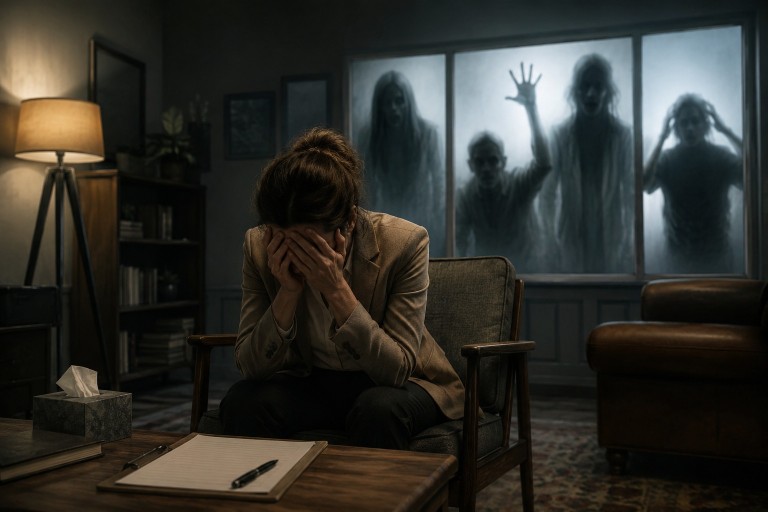
In a notable shift within the genre of horror and psychological films, therapists are increasingly being depicted as complex individuals grappling with their own emotional struggles, rather than as infallible figures. This trend mirrors the broader societal dialogue on mental health and the growing recognition that therapists, too, encounter personal challenges.
Movies such as “If I Had Legs I’d Kick You,” “Smile,” “Backrooms,” and “A Private Life” are at the forefront of this movement, placing therapists at the heart of unsettling narratives. These films explore themes of trauma, fear, and psychological instability, as the protagonists navigate their own emotional turmoil while trying to assist others. Instead of being secondary characters who merely dispense advice, these therapists are portrayed as central figures whose emotional resilience is put to the test.
The portrayal of therapists as ordinary people rather than idealized professionals is gaining traction as therapy becomes more widely accepted and discussed in popular culture. Increasing numbers of individuals are seeking mental health support, and social media platforms are playing a significant role in normalizing conversations around therapy. This heightened visibility has inspired filmmakers to depict therapists in a more realistic light, acknowledging their humanity.
Utilizing elements of supernatural or psychological horror, many of these films delve into the inner emotional conflicts faced by therapists. They address issues such as anxiety, burnout, and unresolved trauma, highlighting the pressures that mental health professionals endure. By presenting therapists as human rather than infallible, these stories challenge conventional representations of the profession and shed light on the complexities faced by those who provide mental health support.