
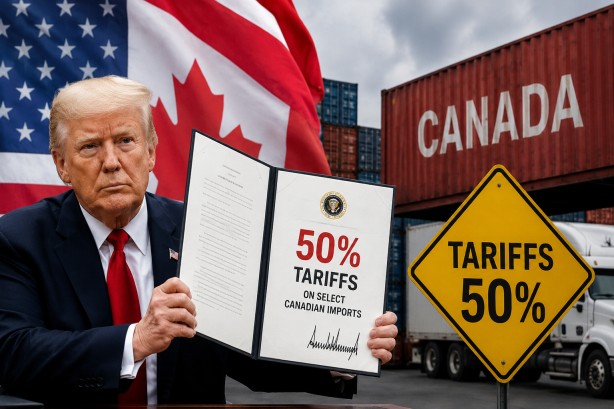
President Donald Trump has sanctioned a fresh wave of 50% tariffs on specific Canadian imports, asserting that Canada has been unfairly treating American goods. Among the targeted items are automotive materials, dairy products, and alcoholic beverages. These tariffs have been implemented through a series of executive orders while discussions under the United States-Mexico-Canada Agreement (USMCA) are still underway.
The Trump administration justifies these tariffs as a response to what it perceives as inequitable trade practices that negatively impact U.S. industries. With these new duties, the administration aims to address these disparities. This move is likely to intensify the ongoing trade negotiations between Washington and Ottawa, as both sides seek to resolve issues surrounding trade and market access.
The introduction of these tariffs is poised to add tension to the economic relations between the United States and Canada. Businesses and exporters in both countries are closely monitoring the situation to gauge Canada’s response and to anticipate the potential effects on trade across North America. The outcome of these developments will be crucial for industries that rely on cross-border trade.
This latest escalation in trade measures highlights the complexities of the economic ties between the two neighboring nations. Stakeholders are keenly observing how this will influence the broader framework of the USMCA and affect bilateral economic interactions. The tariffs could have significant implications for various sectors, and both governments will need to navigate these challenges carefully to maintain a stable trade relationship.