
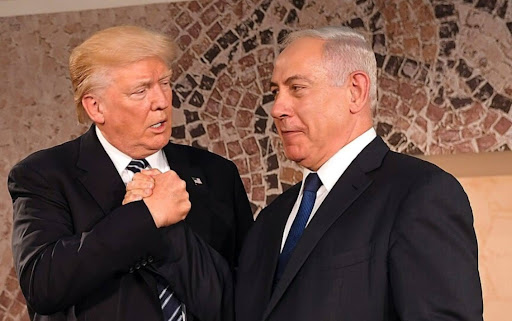
There are things that close allies say to each other privately, and there are things they say in front of cameras. US President Donald Trump crossed that line when he told reporters he had personally instructed Israeli Prime Minister Benjamin Netanyahu not to strike Iran’s South Pars gas field — and implied that Netanyahu had ignored him. “On occasion he’ll do something. And if I don’t like it —” Trump said, trailing off in a way that carried considerable diplomatic weight. The remark was notable precisely because it was public.
Allies, especially those conducting joint military operations, typically work hard to keep disagreements behind closed doors. The fact that Trump chose not to do so suggested either that he was genuinely frustrated enough to break with protocol, or that he wanted to put the message on record for the benefit of Gulf allies and others watching the conflict closely. Either way, the effect was to make the disagreement a matter of international record.
Netanyahu did not escalate in response. He confirmed acting alone, agreed to halt further strikes on the gas field, and wrapped his public comments in language that strongly emphasized Trump’s leadership and Israel’s loyalty. He made the calculation — probably correctly — that deference was the better political play, even if it involved accepting a mild public rebuke.
The broader diplomatic question is what the episode tells us about the structural limits of the alliance. Both governments have invested heavily in the narrative of perfect coordination. The South Pars incident and its aftermath revealed that the coordination is real but imperfect — that Israel makes independent decisions, that the US does not always approve, and that the gap between stated and actual alignment is larger than the public narrative suggests.
The strategic differences underlying the episode — Trump’s focus on nuclear containment versus Netanyahu’s ambition for regional transformation — were confirmed independently by Director of National Intelligence Tulsi Gabbard’s congressional testimony. Trump has also backed away from regime-change talk. Netanyahu has not. The alliance continues — but the public spat has added a new and important data point to how it actually works.