
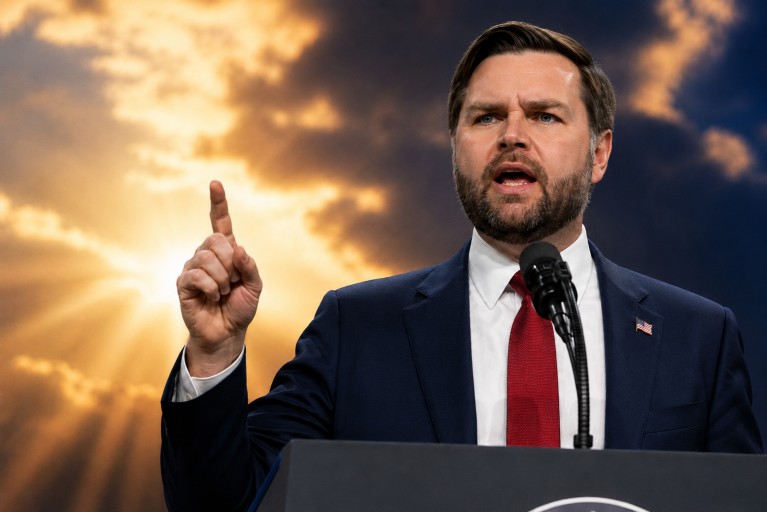
U.S. Vice-President JD Vance has expressed his commitment to what he perceives as “God’s work,” acknowledging the potential role his efforts might play in the eventual arrival of the end times. During a recent podcast interview, Vance shared his thoughts on the possibility of the world nearing its end, though he admitted uncertainty about the timing, which could range from thousands of years away to a much more immediate future.
In his remarks, Vance speculated on the presence of the Antichrist within humanity, citing modern societal developments that he finds concerning from a religious standpoint. He specifically criticized the increasing reliance on artificial intelligence in personal relationships. Vance characterized the use of AI as a replacement for genuine human interaction as “kind of satanic,” emphasizing the importance of meaningful human connections.
The vice-president also recounted experiencing a sense of spiritual unease during meetings with global leaders. He described how certain discussions or comments could trigger what he referred to as a “spiritual alarm bell,” indicating a perceived presence of a darker spiritual influence in those settings.
Vance went on to defend President Donald Trump regarding an AI-generated image that depicted Trump in a Christ-like manner. He clarified that Trump did not intend to mock Christianity or elevate himself to the status of God. Vance described the image as an attempt at humor, rather than a serious portrayal.